
Disruptive Joint: The Silent Revolution of Weeds
Article Sidebar
Main Article Content
Abstract
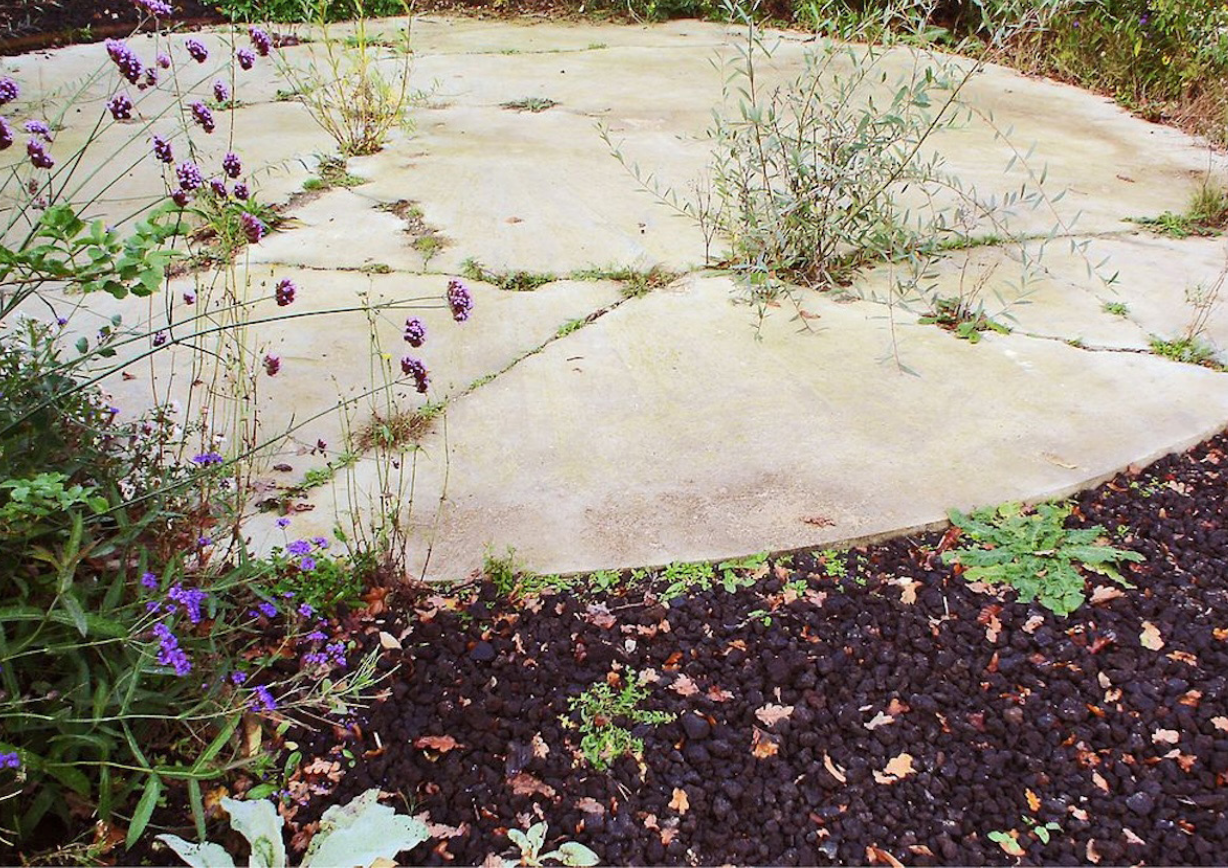
The pavement joint in urban spaces has, in recent years, become a controversial detail, particularly when unexpectedly colonized by wild plants and pioneer species. This article, however, highlights that this is not a spontaneous phenomenon but rather a process: the evolution of this overlooked interstitial space was revived during the immediate post-war period, when ecological awareness emerged globally. By considering examples such as the Ecokathedraal by Louis G. Le Roy, the Jardin des Joyeux by Wagon Landscaping (Paris, 2016), and Gilles Clément and Coloco’s urban regeneration project for the Manifatture Knos (Lecce, 2012–18), this investigation illustrates the transformative process of pavement joints. It emphasizes the relationship between inert matter, soil, and interstitial vegetation, while underscoring the increasing role of craft knowledge, collective practices, and the radicalization of the principle of minimal intervention.
Photo: Spinaspacca, Chaumont-sur- Loire, 2000, Antonio Perazzi. © Studio Antonio Perazzi.
Article Details

This work is licensed under a Creative Commons Attribution-NonCommercial-NoDerivatives 4.0 International License.