
Between Collaboration and Conflict: Legal Practices in and beyond the Brussels Palais des Beaux-Arts (1923–29)
Article Sidebar
Main Article Content
Abstract
While the Palais des Beaux-Arts (Palace of Fine Arts) by Victor Horta is widely recognized as a masterpiece of the architectural canon, this article revisits this case to challenge conventional narratives in architectural history that position the architect as the sole creative genius behind iconic buildings. We propose to shift the gaze beyond conventional sources, such as plans and memoirs, towards understudied archives, with a specific emphasis on legal sources. Arbitration and litigation files, contracts, tenders, and building specifications reveal a complex history of both collaboration and conflict between multiple other actors, from the architect to the contractor to the construction worker. Charting how architectural societies or labour unions influenced the juridical frameworks of the Belgian building sector through media, lobbying, and strikes, we reveal a complex legal ecosystem that extended far beyond the boundaries of the palace’s construction site. By highlighting the importance of alternative archival sources such as legal and administrative documents, we aim to re-narrate the understudied roles of professionals beyond the architect, and contribute to a recalibration of architectural history.
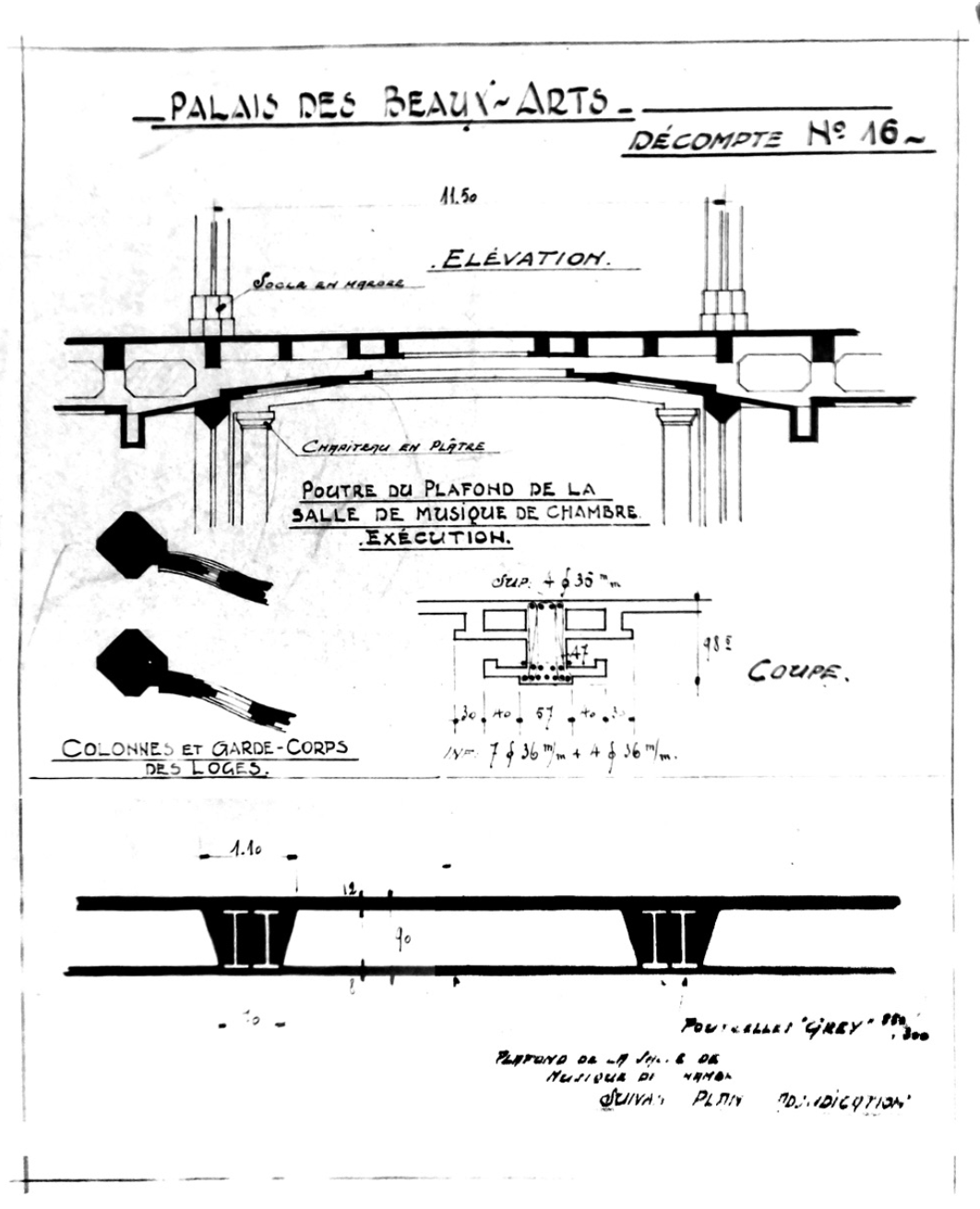
Image: Section of ceiling structure of the Chamber Music Hall, comparing Horta’s solution (below) with final execution by Blaton (above). © CIVA, 1927.
Article Details

This work is licensed under a Creative Commons Attribution-NonCommercial-NoDerivatives 4.0 International License.