
Japanese Woodcraft: Embracing Nature's Imperfections or Conforming to Digital Exactitude?
Article Sidebar
Main Article Content
Abstract
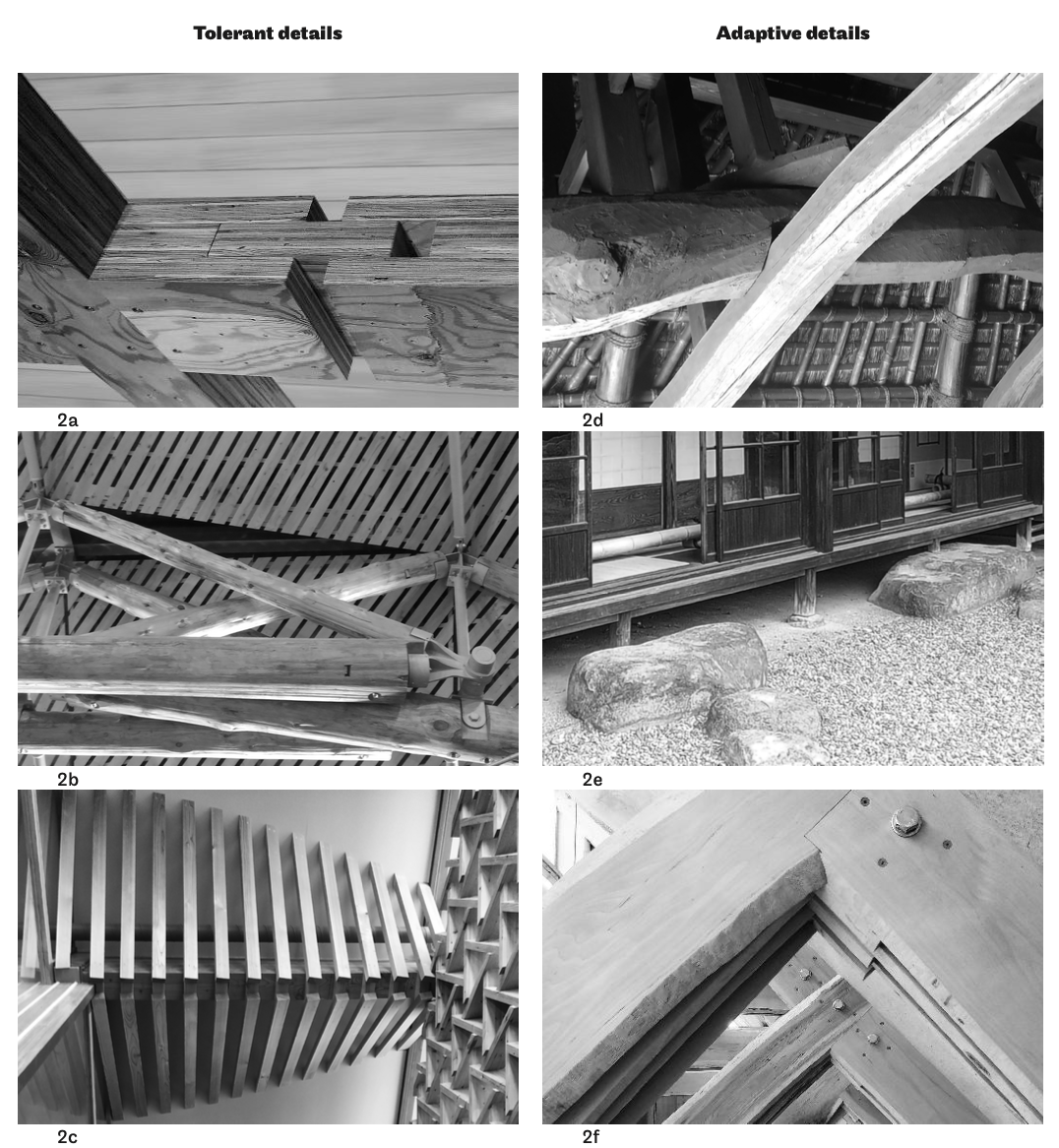
This essay examines the tension between control and indeterminacy in construction details by investigating the impact of manual, industrial, and digital design-to-fabrication processes on Japanese woodcraft. The study highlights the evolving relationship between craft and precision in Japanese wood construction through an analysis of details from projects ranging from traditional architecture to contemporary timber buildings. The report is structured around four key observations addressing primary sources of potential indeterminacy in wood construction: the inherent variability of wood products, the unpredictability of wood deformation, the uncertainties associated with its maintenance, and the indeterminacy of fabrication processes influencing the cultural significance of details. The research clarifies the divergences and convergences between hand-made and machine-made approaches in their relationship to details, precision, and indeterminacy. The findings also reveal the potential of digital tools and information technologies to mediate and integrate these methods. While technology often prioritizes efficiency, selected case studies demonstrate its potential to support more adaptive, context-sensitive approaches that resonate with traditional craft principles and involve local communities. Ultimately, this study underscores the importance of developing tools and algorithms that leave room for the unknown.
Article Details

This work is licensed under a Creative Commons Attribution-NonCommercial-NoDerivatives 4.0 International License.